15 March 2026;        "Beware the Ides of March"
©  Cedric de la Harpe
GoTo AR 06
AFRICANIST RESURRECTION 07
TO 2025 G20 EXTRAORDINARY COMMITTEE
Taste of Africa;
Barefoot Scientist,
Declares War on Inequality Emergency.
Cedric R de la Harpe
University of Knowledge – Soweto
H.v. Europeaus H. v. Afer3&5
GIVEBACK              “Kuwabweza”
ABSTRACT:
I believe that nothing can be more abstract,
more unreal, than what we actually see,
it is the unseen, that must be revealed.
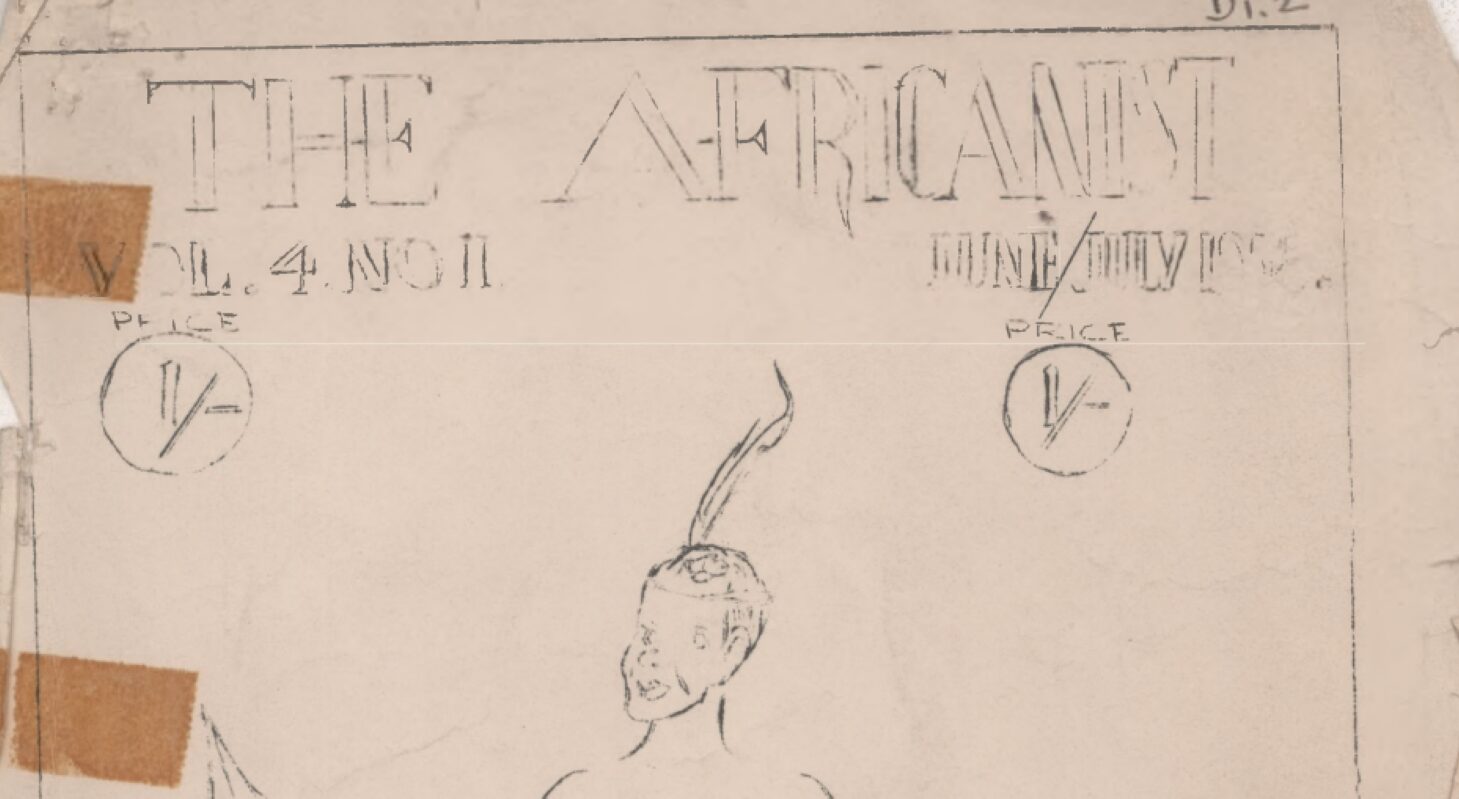
THE AFRICANIST BEFORE 1939
ATTENTION ALL AFRICANIST / PAC H. V. AFER
This pamphlet, and the next Africanist Resurrection 08, serves to encourage the readers, to talk to the elders about their past, we must compile short stories, that relate to the Afrricanist achievements, wheter it was on the grandfathers own land, or others, where he elders worked, and what skills they had. This pamphlet, is aimed at showing the world who we were, and what we could have achieved, if opportunity was not removed from us, the Nazi Holocaust victims, were supported, because the Jews of the world, created Empathy for the victims, and that must be our aim. I am yet to meet an Africanist, who was not a victim, I am yet to find an Africanist, who is not a survivor.
THE LAND:
In 2011 I start to research South Africa’s History based on the question to myself; “Who were we before 1913, and how did we get from 1913 to 2011?
The 1913 native Land Act, contributes to why my earlier finding, does not occur naturally, I repeat the findings.
Findings 2011 to 2012:
Apartheid is not the greatest evil, the prime evil in the world, is “Economic Segregation”:
If it was not for what the English White Colonizer did to the Southern African Black Populations, (and here I include myself), our Black population groups would be the wealth of Southern Africa today, if not the wealth of the world.
I equate the damage that we have done to our black populations with the holocaust, and I ask the question; “Is the damage equal to, is the damage lesser than, or is the damage greater than? In my personal opinion, I believe that the damage is greater than, and the world needs to heal, before we can even start repairing the damage we structured.
I have made numerous findings over the years, but the greatest atrocity in the world:
The greatest atrocity in the world, is when a man or a woman, does not have the opportunity to leave home in the morning, and to be able to harvest sufficient to feed, clothe, medicate, and educate their children, and to feed, clothe, and medicate their elders.
Who were we before the 1913 Native Land Act.
The Boer in the two northern provinces
The Boer in the two northern provinces were in relative poverty, only producing cereal crops for their own use, farming with life-stock, hunting and other activities, unable to sell into the Black communities who were self-sufficient and supplying into the Mining and other Industries.
Between 1910 and 1914, the system wrote a book, MAIZE[2], a TEXT-BOOK, aimed at encouraging the Boer to start planting Maize, A few relevant pages are included here in italics.
Chapter 1, Page 2.
Maize is one of the easiest crops to grow, standing more rough usage than perhaps any other; a favourite Kaffir method of planting is to scatter the seed broadcast over the unbroken veldt and then plough the ground; even with this crude treatment crops of 1,5 to 2 muids of grain per acre obtained.
Chapter 1, Page 3-4
We still hear South African farmers say that maize is a Kaffir crop, and that maize-growing does not pay the more ambitious white farmer. We hope to show in the following pages that, except where abnormal economic or unfavourable climatic conditions prevail, this is not the case when the crop is grown properly.
What the American Farmer Thinks of It. – In view of the fact that the United States produces 820,000,000 muids of maize per annum – three quarters of the world’s crop, and that this is not grown with cheap “native” labour, it may be well to look for a moment at the attitude of the American farmers towards the maize crop.
In the United States it is a common saying that “Corn is King”. “Corn” in America is maize.
Chapter 1, Page 5.
Maize is a White Man’s Crop. – Maize is essentially a white man’s crop, and Prof. Carver (1) doubts whether it “could be grown at all, as it is grown in the Corn-belt, if dependence had to be placed upon Negro labour”. The labour employed in that part of the country is entirely white, earning about £5 per month and board the year round. Yet ……….
Note; in 1912, America had excluded Negro Labour from the maize farming, and ‘paid a white 5 pounds per month’, in 1921 in South Africa the ‘Municipal Black labour was paid 2 pound and 5 shillings per month’.
Chapter 1, Page 7.
Future Possibilities of Development in South Africa, – European corn brokers have recently referred to South Africa as the future maize granary of Europe. Maize will always be the staple cash crop of South Africa. As its value for stock food becomes better appreciated, the local demand will increase, and in this connection Earl Grey’s recent prophecy of a shortage in the world’s beef supply is suggestive. At the present time the country has only begun to show that it is possible to produce good maize. The traveller is impressed with the enormous areas of fertile land, suitable for growing maize, which are at present untouched by the plough, virgin sod like the American prairies. ………..
Driving this Maize Book initiative is the Export market, published in 1914, it would have been prepared before 1913, nowhere in this publication do the writers allow for black participation in the agricultural economy, and any reference to the ‘Native’ the perceived unreliability of our black farmers.
The Black Farmer in the two northern provinces
When Gold was discovered in 1878, the Mining Investors buy large tracts of Land from President Kruger, to secure the mineral rights. In this process Kruger and his colleagues accumulate wealth, and the South African population will search for the Kruger Millions for years thereafter.
From 1835, the trek-boer[3] left the Eastern Cape Frontier, moving away from the English Coloniser, who had taken over the control and administration of the Cape Colony, resulting in establishing of two Boer Republics, the Orange Free State and Transvaal, the two gold bearing provinces.
The Indigenous populations and the Boer, lived similar lives through to 1878, they farmed as neighbours, typically black farmers farmed as a family clan, settled on an unfenced piece of ground, with permission from the neighbour or the system / larger family clan, that controlled the area, and if compensation was expected, it was agreed and paid.
Typical conflict takes place, as space and livestock is protected by the farmers.
Then once Gold was discovered in 1878, a representative of the gold investor, the now landowner who had bought the land, from President Kruger, arrived with a ‘piece of paper’, giving the farmers notice that he was the new owner, and they either agree to pay the rent, or vacate the land.
The Black families had lived on the land for fifty years, the family homes well established, they had cleared and tilled the land, the planted crops were maturing, additional lands were cleared and tilled to meet the demands from the Kimberley Diamond fields, so these farmers had one choice, to agree to pay the demands of the new landowner, to pay 50% of all our harvested crops.
Overnight, the Black farmers become sharecroppers on their own Indigenous land, the Afrikaner farmer did not farm with Maize, so they were required to pay cash rental, and they become tenant farmers, ‘Bywooners’[4], on land that they had farmed on, for over twenty years.
I believe the Transvaal consisted of a productive community that could have supplied a large portion of the country’s needs, and had they not been segregated from their land, Sub-Saharan Africa would be economically viable today.
I quote in italic from Exclusion, Classification and Internal Colonialism:
The Emergence of Ethnicity Among the Tsonga-Speakers of South Africa
Patrick Harries
Africans and the Land (The *1 relates to this heading)
*1The ………, such as the Spelonken, Africans could live and grow crops almost wherever they wished, including on white-occupied land. At the end of the 1870s some of the larger white landowners in the Spelonken shared their farms with several thousand Africans. By 1888 it was estimated that some 12, 500 East Coast immigrant families lived on ten white farms in the Spelonken.
*1 It was only in the late 1880s that white settlers started to arrive in the northern Transvaal in appreciable numbers. These were largely landless bywoners who, in exchange for military service, were provided with small ‘occupation farms’. …….
The Afrikaner was provided with small ‘occupation farms’ in return for military service, and the only became ‘bywoners’ when the land was sold to the mining investors, and the same would happen to thousands of black farmers, who would become ‘sharecroppers’ paying the mining investor 50% of his crops.
I continue the extract:
*1This was so because, as the Witwatersrand gold discoveries pushed up the price of land and drew Africans more deeply into the money economy, landowners started to turn off their estates bywoners who had been occupying large tracts of land and began to levy direct cash rents from the resident African population.
The Afrikaner Bywoner found it more difficult to compete with the black farming family, because the black family, were all working together as a unit, and often the wife was working for a white family. Sol Plaatje in his writings relates stories that show that the Sharecropper families often assisted the Boer, who in turn performed functions for the Sharecropper.
*1Most Tsonga-speakers lived on land that had not been inspected or surveyed for private farms and hence was termed ‘state land’. However, by the end of the nineteenth century, Africans were steadily drifting on to white-owned farms. This movement was encouraged by a discriminatory tax system which penalized Africans living in rural locations or on government land with heavy taxes relative to those living as tenants on white-owned land, while those in active service on white-occupied farms paid least. The sale of state land also caused many Africans to settle on white-owned land. Many were drawn by the fertility and better access to markets of European-owned farms. This movement was facilitated by the large scale sale of occupation farms to land companies and local speculators.
The tax system was implemented by the Economic Elite, because they wished to have the Sharecropper farming on their land, and paying them 50% of the crop. What is important here, is that none of the mining investors were farming, the common term used for what they were farming was described as ‘Kaffir Farming’ symbolizing a person who had a number of Sharecroppers farming on his large tract of land.
*1 The undercapitalized, if not impoverished, occupation farmers were unable to raise capital because the terms of their tenancies precluded the mortgaging of their farms, and they typically lived in ‘mud cabins that would disgrace a Connemara squatter or a Skye crofter’. They were broken by the almost continual commando service demanded by a decade of wars mounted by Pretoria against the northern Transvaal chiefdoms. With their capital invested in livestock and without government aid, they were unable to withstand the effects of the extended drought and the Rinderpest epizootic infection of the mid-1890s.
Many abandoned their lands and turned to transport-riding, hunting, woodcutting and salt-extraction, although even these traditional resorts of the poor had been made increasingly difficult by government concessions and regulations. In 1896 it was estimated that 29 out of the 30 white families in the Lowveld were starving and had been reduced to living off locusts and honey.
The slide of the white community of the northern Transvaal into impoverishment was to continue well into the twentieth century.
The only reason that the white farmer abandoned their land, was that the Mining Investors owned the land and the Bywoner was required to pay a cash rental, and the rent increased regularly, the Sharecropper and his family, both male and female, would clear and till more land, and harvest greater crops, but the Bywoner did not have this ability.
*1 Absentee landlords, often mining companies prospecting for minerals, were only too willing to encourage the settlement on their lands of Africans who would undertake bush clearance and pay them rent and grazing fees. Many Africans preferred to live on land owned by the state or absentee landlords, where taxes were lower than in the reserves where, if they paid rent, it was in cash rather than labour and where existing forms of social control and production could be maintained.
*Others moved from chief to chief or farm to farm in an attempt to better their living conditions. Because of this competition, the labour extracted by white farmers from their tenants could not exceed the combined monetary value of the rents and taxes paid by tenants living beyond the borders of white-occupied farms. Similarly, because of the private reserves that existed on estates owned by land speculators and the state, white farmers were obliged to reserve large parts of their farms for tenants who paid them rents in both labour and money.
*1 The Republican anti-squatter laws of 1887 and 1895 were legislated in order to force African tenants off ‘private reserves’ so as to spread the labour more equitably and control competition between white farmers. But these laws had the opposite effect for they caused large numbers of Africans in the north-eastern Transvaal to move into the Zoutpansberg mountains, which remained largely independent of white rule until 1898, or on to the malarial lands of the Lowveld. Until southern Mozambique was finally conquered by the Portuguese in 1897 …
Following the Anglo-Boer War 1902 to 1910
*1 Following the Anglo-Boer War, demands for the implementation of anti-squatter laws increased as the price of land soared and as the labour needs of wealthy white farmers rose with their transition from stock to arable farming. These farmers were opposed to the existence of government reserves which provided Africans with valuable farm land and which pushed up the cost of farm labour by providing Africans with an independent means of existence. At best, government and private reserves were viewed by white farmers as labour pools for mining capitalists.
*1But the British administration in the Transvaal, in its support for mining capital, extended the reserves and made little attempt to evict ‘squatters’ who paid taxes and rents and who sold a considerable amount of both food and labour to the mines. By 1906 in the Spelonken alone there were over 40, 000 Africans living on land that was owned but not occupied by whites.
*1 In 1908 the first post-war Responsible Government, which represented wealthy farming interests, moved a year after its election to force African peasants into relationships of labour tenancy on white-occupied farms.
A bill was tabled in the legislative assembly with the express purpose of removing up to 300,000 squatters throughout the Transvaal.
According to the founder of the Swiss mission in the Spelonken this was ‘the most tyrannical law that has ever existed in a Republican [sic ] country, a law that would dismember tribes and clans and disperse thousands of families’.
LAND CLAIMS;
Barefoot Scientist makes a comment, a new one, dated 18 February 2026, that no such bill was passed in 1908, which effectively, overrides that status of any Land Claim, and or any Legislation or restriction related to land ownership.
*1………………. Between 1908 and 1910 the number of Africans in northern Transvaal locations almost doubled from 52,500 to 101,700; those living on un-surveyed Crown land dropped from 109,000 to 90,000; and those on white-owned land, although still the majority, decreased from 175,800 to 168,000.
1910 to 1913 to 1929; the Union of South Africa to the Native Land Act to Global Market:
*1 A common African reaction to the anti-squatter laws and the increasingly overcrowded locations was for families to club together and purchase land, initially held in ‘trust’ but after 1905 in freehold. Between 1910 and 1912 Africans in the northern Transvaal purchased more than 16,000 morgen of land worth over £15,000 and by 1913 they held a total of 71,500 morgen in freehold.
*The Natives Land Act of that year was a compromise between mining and landed capitalist interests. It promised on the one hand to extend the rural locations as labour reserves for the mines, while on the other hand it promised, first, to provide farmers with labour, by acting against rent tenancies and, second, to prohibit Africans from owning land outside areas ‘scheduled’ for their occupation. Land bought by a combination of more than six Africans had to be purchased on a tribal basis and held by the Minister of Native Affairs for the tribe concerned. In later years, the term ‘tribe’ became a synonym for African purchasers of land in scheduled areas; as one northern Transvaal attorney stated in 1930, ‘a Tribe is a syndicate of ten to fifteen families which buys land and elects a chief and petty chief.[54] The Land Act also encouraged labour tenancy by proposing a graduated tax, in effect an annually increasing fine, on those landowners who accepted rents from Africans in cash or kind. But this section of the act could not be implemented until sufficient land had been released to cater for those rent paying ‘squatters’ who refused to become labour tenants.
For two decades after the Land Act Africans were to retain a precarious hold on their land through the rent tenancy or ‘Kaffir farming’ system.
For two decades after the Land Act Africans were to retain a precarious hold on their land through the rent tenancy or ‘Kaffir farming’ system.
The Native Land Act, supposedly, “It promised on the one hand to extend the rural locations as labour reserves for the mines, while on the other hand it promised, first, to provide farmers with labour, by acting against rent tenancies.” But we know what the Mine labour actually looked like, in 1913, there were 50 000 South Africans, all recruited from Umtata in the Easter Cape, and 100 000 foreign nationals working on the mines.
The tax provision was introduced to keep the Sharecropper on the mining Investors Land for two decades after the Native Land Act, allowing the mining investor to accumulate wealth through the “Kaffir Farming” system.
*1 In purely economic terms it continued to pay Africans to remain independent producers on company or Crown lands. Here they intermittently paid rent and grazing fees, whereas under a labour tenancy relationship the family head or his sons were required to work for three months each year without pay. Many white farmers automatically entered into rent paying tenancies with the residents on their farms for, as one northern Transvaal chief stated, ‘when a white man buys a farm he finds trees, bushes and natives on that farm’. A farmer who did not have the capital needed to exploit his land directly would rent out one section and reserve another part for his labour tenants. The persistence of ‘Kaffir farming’ in the northern Transvaal almost two decades after the passage of the Natives Land Act implies that labour tenancy agreements continued to favour African workers. If the latter felt that the terms of their tenancies were turning against them, they would frequently desert their employers by moving to rented land. They also exercised the more radical alternative of moving on to government land, reserves or mission farms, or of purchasing farms within scheduled areas.
From the 1890s, through to 1929 to 1936, the Black Farmers fed the nation, on the mines alone, 350 000 mine workers were being fed, add to that the Railways, Construction, Manufacturing, all fed by the ‘Kaffir Farming’, of this volume, the Mining Investors, serve as the Food Chain Market, as they already own 50% of the Maize used to feed the Nation.
The Erosion of the African Position: (The *2 relates to this heading)
*2 As early as the turn of the century, it was noted that African producers in the northern Transvaal annually supplied Pietersburg and Pretoria with ‘thousands of bags’ of grain and that African maize production in the Zoutpansberg exceeded production in other areas of the Transvaal where Africans dominated the cereals market. The local newspapers frequently reported in the following vein:
*2The Kafirs grow enormous and increasing quantities of mealies [maize]; quantities so much in excess of their own requirements that the district supplies more of this indispensable article of food for native labourers on the Rand fields than any other part of South Africa.
*2 African production of cereals for the market was encouraged by both traders and the mines. Nor was the state willing to act against Africans who provided an important source of government revenue; in the years immediately following the Anglo-Boer War the direct taxes paid by northern Transvaal Africans to the government more than quintupled to £140,000.
*It is clear that a relatively prosperous, if small, class of African farmers was emerging at the expense of their peers. Evidence for this lies in the purchase of land by individuals who themselves took on rent-paying tenants.
In 1911 there were 2000 ‘Shangaans’ living on an African-owned farm in the eastern Transvaal and, five years later, there were some 10,500 Africans living on land held in freehold by Africans in the northern Transvaal. Some of these farmers commanded an annual income of £500 and virtually all had adopted the plough which, together with draught oxen and wagons used for marketing purposes, required a considerable capital investment. Some market-orientated cattle farmers had herds of up to 300 head. Thus by 1930 a number of African farmers had emerged who were able to rent out land and annually market several hundred bags of grain as well as fairly substantial numbers of cattle.
*2 In evidence given to the Natives Economic Commission of that year, it was stated that in the northern Transvaal over the previous forty years, ‘. . . [African] marketed produce has increased. This increase is considerably greater than the increase in population. According to another witness, ‘You will find to-day that [the Africans] have raised tens of thousands of bags of Kaffir corn purely for market purposes and the greater portion of that money which they get for their corn is to pay for land and to buy land.
But the growth of this African petty bourgeoisie was abruptly truncated in the 1930s as the government intervened in the northern Transvaal to halt the growing poor white problem.
In the 1930s it was not the Government that intervened in the Sharecropper farming, in 1930 legislation is passed, and then again in 1936, which would remove these successful farmers from the land, I will discuss fully below:
*2 The destruction of northern Transvaal farms by the British during the Anglo-Boer War had pushed increasing numbers of already poor Afrikaans farmers into a marginal existence. In many instances landowners found it more profitable to enter into tenancy relationships with Africans rather than politically more powerful Afrikaner peasants or bywoners. Although large numbers of whites lived in conditions of extreme poverty in the northern Transvaal, they received little sympathy from the government and, considered ‘indolent, lazy and indigent’, were treated as a social rather than an economic problem.
Note, back in 1930, the unemployed whites, were considered ‘indolent, lazy and indigent’ and treated as a social rather than and economic problem, this is exactly what has happened in South Africa, post-democracy, and once a citizen becomes a social problem, he / she is no longer an economic problem, and all the economic section does, is contribute to subsidies, you consume the Neo-Liberal products, and 50% of your subsidy, returns via the extraction-funnel to the Neo-Liberalist.
I must repeat the IMF philosophy:
CONCLUSION
If SA in the Apartheid years had established its preferential and favoured relationship with Western capitalist Interests in general, and with its ‘specialized’ agencies, such as the IMF in particular, because of its place and functions within the post-World War II global structure, then it will be reasonable to conclude that the future for a of this relationship will depend crucially on the extent to which post-apartheid SA will continue to play this roll – whether this arises willingly, by comprise, or by virtual blackmail.
That in turn will depend, among other things, upon the class-representative basis of the post-apartheid, which will determine its path of development and its International economic relations and policy.
In general, revolutionary government, especially in the developing world, have found that it has often been as hard to live with the IMF as it would have been to live without its support.
In the post-revolutionary era a country like SA, whose particular area of development has been intrinsically tied to its extensive International economic relations, will find the task of ‘living’ with this historical legacy a particularly crucial and challenging one.
Given the role of the IMF in the world economy, in a post-Apartheid SA, its relationship with the Fund is likely to be characterised by Increasing tensions, conflict! pressures and struggles as one ‘moves’ from the pole of a democratic capitalist state – as one possible post-apartheid form – to one of socialism (under workers’ control).
Increasing controls over their lives by working and popular classes may be accompanied by an increasing threat to their very existence of such a state from Western Capitalist States seeking to maintain or reassert their economic and strategic Interests in this region – which they appear to have identified as being crucial to modulating crises that arise from Capitalist form of accumulation.
The IMF a supposedly apolitical International agency, can very well form an Integral (though unseen) part of the weapon available to the West in shaping the national and development of, and transition to a post-Apartheid society.
“Neo-Liberalist Commits Genocide, on the Worker / Popular Classes”
South African Land Claims:
The South African Government stipulate that Land Claims can’t pre-date 1913, I am not going to get involved in a very complicated issue where the Mining Investors were holding large tracts of land, and the tenant farmers were a majority of Black Sharecroppers, with Boer Bywoners.
Anglo-Boer War ‘scorched earth policy’
What is important is that the English, in their ‘scorched earth policy’ burnt the Boers homes and all their ‘cereal crops’, removed their livestock, and confined the wife and family in Prisoner of War camps.
They removed the Blacks on from the Land, that the military deemed worked for the Boer, and held the Blacks in POW Camps near Stations. One such Camp was in the now Township Pimville in Soweto, known as “Skomplaas”.
Critical to my presentation, is that the ‘cereal crops’ that were burnt, were largely those crops of the Black Sharecroppers supplying into mining and industry, on land owned by the Anglo-American Investors.
THEN;
As is seen from the extract above these Black Sharecropper’s returned to ‘their farms’ and were able to live when their homes had been burnt down, and able with virtually nothing, to rebuild their crops, and start supplying the Mining Investors, for nearly 30 years before they were forcibly evicted.
The Government had no sympathy for the poor Afrikaner, not in 1930, and still not today, and this is because all poverty persons are considered ‘indolent, lazy and indigent’, were treated as a social rather than an economic problem.
Neo-Liberalism was alive in 1930, and this comment is typical of how the Latipac sees poverty.
1913 NATIVE LAND ACT
During the period 1910 to 1913 the blacks purchased 78 farms, 300 000 ha. and paid 95 000 pounds, triggering another threat of the economic invasion of the white economy, triggering the 1913 Native Land Act.
In 1913, our blacks were still known as ‘native’ and when the Colonizer ‘legally’ reserves 87,5% of the land surface for the ‘white’, they call it the Native Land Act, in an attempt to give the impression that the land separation was done in the interests of the Native.
Thanks to Sol Plaatje writings, I quote in italics a few comments made during the debate on the motion for the second reading of the 1913 Native Land Bill.”
But if we are to understand what is proposed, we would have to consider the position in the sub-continent under different heads: —
- Urban Areas, inhabited by 660,000 whites and 800,000 blacks:
3,703,935 acres - The remaining 298,961,303 acres which the Commission would divide as follows: —
NATIVE AREAS, for the Bantu and such other coloured races as are classed along with them numbering just about 4,000,000 SOULS:
38,626,858 acres or 18,246,451 morgen (SA).
EUROPEAN AREAS, or nearly the whole of Rural South Africa, for the occupation of 660,000 RURAL WHITES (mainly Boers):
260,334,444 acres
My research surprised me when I discovered that 1,200,000 blacks were living and farming on what we consider white farms today. This is twenty-five percent of the black population, and at this stage we only had 1,200,000 whites, 600,000 Afrikaans, 600,000 English and other.
By 1913, twenty-five percent of the Afrikaans population were in the urban areas
At this stage the black farmer was earning 100 to 500 pounds per annum, after paying their rent, a few years earlier you could buy a stand in Eloff Street at 5 pounds.
The black farmers were the main provider of maize in the country, the Afrikaans farmer considering this crop to be a Kaffir Crop.
After the Frontier War, and the establishment of Transkei, there were 450,000 blacks in the Transkei, and 1,000,000 still in the Eastern Province.
In 1913, 300,000 blacks farmed in the Northern Transvaal.
In 1913 300,000 blacks farmed in Natal.
In 1913, 2.5% of the Orange Free State was under maize, mainly farmed by black share-crop farmers.
In 1913 when our Native Land Act was introduced by the ‘white’ colonizer, the black population of 4,500,000 souls, were only allocated eight times the land, that the white allocated to the Kruger National Park, for few animals.
Since then, the ‘white’ has extended the Nature Reserve areas, in order to maintain the balance in the Nature Reserves, and even with the increased land areas, the ‘whites’ have needed to cull animals regularly, to ensure that the animals did not starve.
As the Indigenous populations increased over the years, the Latipac does not allocate more land to the Blacks, they just rely on their tenacity and survival ability, that the whites do not respect.
Was it natural that the Indigenous cattle, should be subjected to the starvation process, while the grassy tracts of the whites’ God-given territories, are mainly untenanted, and preserved as breeding grounds for venomous snakes and scorpions?
Notwithstanding the 1913 Native Land Act, the productive Black Sharecropper Farmer was the preferred tenant, and a tax system was introduced to encourage them to continue farming on the ‘white’ land, £3 if they lived on Native Territory, £2 if they lived on State controlled land, and £1 if they lived on ‘white’ owned property.
Through till 1929, the Sharecropper and Bywoner sort of united, as they battled drought and disease, while paying for the Mining investors land, bought illicitly
The End of the Two Decades after the land Act:
For two decades after the Land Act Africans were to retain a precarious hold on their land through the rent tenancy or ‘Kaffir farming’ system.
In October 1929, Wall Street collapses, the depression hits the world, and the second leg of the shipping industry collapses, the new world unable to provide agricultural supplies into Europe, the South African 1880s Mining Investors, the ‘land owners’, the global-market importers and exporters, turn to their own land to supplement Europe’s needs, or rather, to supplement their loss of profits, from the new world agricultural sector.
The European landowners, can’t trust the Black farmer, to provide the volume and quality needed for export, the English was concerned that the black farmer would sell his crop, to another, for a hand full of beads, and when he had enough money, he would sit under a tree and drink beer till hungry.
The ‘Mining Investors’ then sub-divided the land they ‘stole’, all the land south of the Limpopo and North of the Orange, paid for through the sweat of the sharecropper and Bywooner, land that they had cleared and tilled over the years, having sub-divided their land, they sell the land to young white Afrikaner farmers, together with the land, they sell the equipment, the seed, the fertilizer, launching the Compound Interest funding, soon to launch the Land-Bank for the ‘whites’.
The success of the young Boer as a farmer, was the training provided, and more importantly, the structures that was developed, the ‘importers and exporters’ undertook to buy all their crop and livestock production, they created the storage and transport systems, the milling and distributions facilities, turns the Afrikaner Boer, into the power that they are today.
Had the New Democracy Black Farmers, had the start that the young Boer got in the 1930s, they two would have succeeded.
The Sharecropper’s Voice:
*2 The transformation in the 1930s of a large part of the African peasantry into a landless proletariat was movingly captured by a mission-supported African newspaper published in the Spelonken whose editors remarked in 1932:
*2 We are gradually being dispossessed of the land which we and our ancestors, from time immemorial, occupied. Daily we see big parties emigrating from their old homes (because the farmer has bought the farms and requires them to work) to places they might live in security and with freedom. But alas! such a place is nowhere! They may perhaps go to the locations but they will experience in the course of time that they are in no better position as the locations are congested and barren of vegetation.
FOOD CHAIN REMOVED FROM THE BLACKS
Prior to 1930, our Black Farmers’ cereal crops, were sold into the mining, industry and municipalities, to feed our migrant labour, importantly, following the gold investors becoming landowners, they became owners of 50% of the crops, they were the sustainable crop farmers, and the white investor’s farming activity from the 1880s, was referred to as ‘Kaffir’[5] farming.
In October 1929, ‘Wall Street’ collapses, the Mining Investors, over extending the financial system, and the New World / America farmers are unable to
As the ‘importers & exporters’, switched to Southern and Central Africa to fill the Americas crops into Europe, they remove the Black Farmers from their land, and their arrangement to buy all the Boer’s crops, brought easy profits to the Gentry.
They selected the best quality which they exported to Europe, their next basket that they already controlled, was the supply of cereal crops into our labour sector, to feed the mining, industrial, and municipalities slaves.
The lower grade, not suitable for export, was sold to the poverty groups, their new market that opened up, was the Blacks now on land too small to farm on, all now removed from productive land, needing to provide labour to the ‘white’, in order to purchase their staple foods from the ‘importer and exporter’?
As the Global Market moves through the 1936 to 1943 period, the Americas are back in full production thanks to the WWII needs, and with the excess of cereal crops being produced, the globalization industry, as we know it is, starts to control our lives.
Maize, or as known in the Americas, Corn, is being overproduced, the ‘importers & exporters’, take the American Corn-flake, a health flake, add a bit of sugar, and their media marketing, and soon the world is fed the ‘Corn-Flake’ as the ‘must’ eat breakfast.
As the Maize from the Americas come back into production, the Global-Market finds it more profitable for the yellow maize to be produced and shipped to Europe, and the White maize production becomes Africa’s domain.
In order to prevent cross-contamination of the yellow maize kernels into the white maize, the first step is to ban our black from planting any maize, in particular, the Indian Corn from the USA.
Once the Latipac takes control of the milling industry, to increase overall profits, the maize energy is separated, and the livestock feed produced, gives a boost to the Latipac meat industry, as the millers removed the germ and the pericarp, from the maize kernel,
By the 1950s, large-scale, industrial processors in South Africa, the Rhodesia’s now Zambia and Zimbabwe, and Kenya, grain millers began using roller mill technology, the removal of the germ and pericarp, makes refined meal look whiter, last longer, and taste sweeter than whole meal, producing a refined and more ‘expensive looking’ type of meal, giving the Latipac the monopoly on maize meal sales to cities and grain-deficit rural areas of the Blacks, once local supplies were exhausted.
Back in 1929, the Black controlled the food chain, maize and sorghum, the two cereal crops were produced by the Black farmer, except for the English farmer in the Natal area, who was already exporting, the Boer did not plant maize, as they were unable to sell into our Black communities.
Before the European exterminated the wild game, the Black family’s cattle, goats and sheep, was used for commerce, the livestock represented the clan wealth, the lands were tilled and planted with Indian maize and grain sorghum, for consumption and commerce, prior to 1930, the open lands plants provided the Black family’s diet with essential vitamins and minerals.

Once the Food Chain was removed from the Black families, the ‘Global Market’ influenced the Black’s diet, the main source of influence was the daily rations that they were fed by their employers, from the very fine white maize, which today’s youth will lay claim to as the ‘black man’s brand’, not wishing to eat his gogo’s[6] rough ground maize, to the intestines, and the ‘dop-system’ on the wine farms.
In the 1950s, and 1960s, the very fine, very white Maize, caused the children to suffer from Kwashiorkor, a form of protein deficiency in the diet, many children died. The elders were very aware that young black children were suffering from Kwashiorkor, the many pictures that filled the news-papers were shocking, but there was very little concern for the children, or what caused the illness. The elders complained, complained, they complained.
Research eventually identifies that the removal of the germ and the pericarp, from the maize, was killing the children.
After years, without ever talking to the blacks, the ‘Latipac’ added supplements to the very fine white mielie-meal, they sponsored, they play loud music, they supply beer, they give meat and the new ‘pap’ to the people all over the Country, they dance, they drink beer, and the unhealthy maize, becomes our ‘black brand’ again.
America, their poor people had the same problem, the American no longer feeds the fine maize for porridge, rough milled only, the fine is only used for baking muffins
Poverty food ‘culture’ was created by the Global Market, through the selection of the first grade and prime cuts for the rich, and the dregs and off-cuts, for the poverty groups. Every product on the Supermarket shelf, is planned and destined to a specific social structure, the frozen Chicken braai-pack, has become poverty “culture”, the organic free-range chicken, the Gentry “culture”.
Throughout the world, throughout Africa, as the Monopoly-Capital conglomerates start to control the milling industry, soon the small grocer disappears, and the super-market, to be controlled by the Globalization industry, that dictates what we eat, what we drink, what we wear, and what we drive.
If the ‘white’ had not removed the Blacks from their farming activity, they would still be controlling the food chain in Africa, the Americas, Australia, and other colonies, today.
If they controlled the food chain, they would have control of the clothing chain, the furniture chain, and the motor car chain.
If the nations of the world, do not wish to become nations that have annual escalation of refugees, nations that are ruled by the constable and the Military, the H.v. Afer, and other Indigenous Populations, all now seen as the poverty blacks, these populations must be allowed bring the Food Chain back to their Indigenous populations.
‘moves’ from the pole of a democratic capitalist state – as one possible post-apartheid form – to one of socialism (under workers’ control).
Barefoot Scientist, Cedric R de la Harpe
University of Knowledge – Soweto
H. v. Europeaus H. v. Afer3&5
This qualification,is also my signature, shows a
European, H.v. Europeaus, whose mind-set is dominated
by the Sub-Saharan H.v Afer, #3 Behaviour, and
#5 Governance patterns, expressed through the
math' “to the power of” symbol.
safari@tasteofafrica.co.za. Link to AFRICANIST 08
| Eradicate Corruption to Eradicate Poverty |
[1] “G20- Report, the “Inequality Emergency” as presented by G20 2025 President, Cyril Ramaphosa, as the G20 split takes place, this dissertation is also addressed to US President Donald Trump.
[2] https://archive.org/stream/maizeitshistoryc00burt#page/808/mode/2up
[3] Farmer using wagons to move through the Aboriginal lands, seeking their ‘own land’.
[4] ‘Lives by’ sort of direct translation, meaning tenant on land.
[5] ‘Kaffir’ a derogatory name for black,
[6] Grandmother